Origins in Disaster Response
The origin of the Farmworker Association of Florida traces back to the mid-1980s when Central Florida faced the wrath of several winter freezes that wreaked havoc on the citrus crops, leaving a trail of devastation and rendering countless farmworkers unemployed. Left wit no work and no income, African American, Hispanic and Haitian citrus workers in Mascotte, west of Orlando, organized themselves to confront the crisis and to fight for disaster unemployment assistance. Farmworkers in the citrus and fern industries in Volusia County in and around the town of Pierson, also impacted by the devastating freezes, joined the organizing efforts and in 1986, together they formed the Farmworker Association of Central Florida (FACF), a grassroots, community-based, farmworker-led, non-profit organization to fight for social justice for themselves and for other farmworkers.
The organization’s organizing efforts later extended across the state in response to natural disasters affecting farmworker communities in other areas, including Hurricane Andrew in Homestead in 1992, flooding near Immokalee in 1995, and hurricane damage in 2004 and 2005, in East Central and Central Florida. The Farmworker Association of Florida, at the request of farmworker communities in those areas, established offices in Homestead, Immokalee, and Fellsmere.
Over the past 42 years, as the organization has grown, FWAF has continued to respond to natural disasters in the state, including freezes, hurricanes, and floods. As a grassroots organization dedicated to supporting farmworkers and their families, we understand the importance of preparedness and disaster training, plus, the urgency of meeting immediate needs and helping individuals recover their livelihoods. We are proud to share the following updates on our ongoing activities.
Disaster Preparedness
FWAF is a member of several coalitions, alliances, and networks that focus on climate justice including hurricane preparation and organizing like the Florida Climate Equity Cohort (FLCEC) and Florida Immigrant Coalition (FLIC). Through these collective efforts we have identified and addressed issues that impact the farmworker community during disaster seasons, such as language barriers, exploitative work practices, inadequate housing, lost wages, lack of access to health care, access to shelters, transportation, and lack of access to disaster preparation supplies.
We have met with emergency response teams on the local and county level to create cohesive, inclusive plans before the storm so that all of our community feels prepared. We have met with emergency management authorities of several local governments to make sure we know what is need for entry to shelters, how information about the storm is being shared with the community, and how post-storm cleanup will be managed.
FWAF has also created Public Service Announcements and preparation guides for climate disasters, sharing them with the community and with the public via social media, our website, and on flyers. Checkout these for this storm season!
VIDA Project
FWAF was invited to engage in a project with the University of Florida Institute for Food and Agricultural Sciences in a project called VIDA. The VIDA project, conducted in 2024 and funded through the Natural Hazards Center, sought to understand the variables that made our farmworker communities in North Central Florida more vulnerable to natural disasters. FWAF joined 15 representative from different organizations to form Community Advisory Boards, which provided data and interviews as evidence for this University of Florida research project. The project included asset mapping, farmworker demographics, crop mapping, interviews with community health workers, and more. The finding revealed these factors that made families more likely to be disproportionately affected by natural disasters: socioeconomic status, limited experience in the U.S., substandard housing, labor-intensive agricultural jobs, and lack of access to public services. These factors are are important to consider in our disaster preparation relief efforts as we work to ensure equitable safety. The findings were shared with local entities and were presented at the Public Health Disaster Research Webinar in 2024. They inform our work and how FWAF approaches preparation for natural disasters. The report of those findings can be viewed at the link above.
Trainings
In preparation for the hurricane season, FWAF has partnered with the Red Cross to provide training sessions on hurricane safety and preparedness. FWAF is deeply appreciative of the Red Cross’s ongoing contributions and longstanding support over the years. Additionally, collaborative efforts through statewide coalitions have resulted in the development of a hurricane training model centered on community-based neighborhood organizing.
Our Climate Justice Youth Group in Homestead has been trained in hurricane preparedness and has even created scavenger hunts to help other students learn what about around their house would help in the event of a storm.
Disaster Relief Efforts
Recent years have brought several devastating hurricanes to Florida, including Hurricane Ian (2022), Idalia (2023), Debby (2024), Helene (2024), and Milton (2024). Before, during, and after every storm, our climate justice organized send out live forecasts to inform the community of local hazards and dangers over our WhatsApp group and Facebook pages. However, every disaster comes with different challenges and circumstances, so FWAF has been tasked with adapting our responses to best respond to needs of the community.
Milton
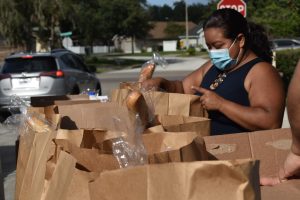
After Hurricane Milton, the Farmworker Association of Florida was at the forefront of providing relief and recovery efforts for our community members who were severely impacted. Thanks to our partnership with Cracker Barrel and contributions from our own funds and volunteers, we served 2200 hot meals over four consecutive days. Farmworkers and community members volunteered alongside us, helping to deliver much-needed sustenance to those affected.
We deliver six pallets of culturally appropriate food, water, hygiene products, and cleaning supplies to community members in our Pierson office, and residents in Dover, FL, ensuring access to essential supplies in the aftermath of Milton. We also assisted community members in applying for FEMA aid after the storm.
Helene
In the aftermath of Hurricane Helene, many of the migrant farmworkers from south Florida were stranded in North Carolina and unable to support their families while the NC farms were flooded. FWAF helped raise and send money to some of the families affected to cover the lost wages and connect them to organizations working on the ground in North Carolina to receive support. This allowed families who had lost their only source of income to pay their utilities and rent and gave them the precious time needed to get themselves back on their feet.
Debby
Hurricane Debby in 2024 dealt north Florida a devastating blow. The counties of Suwannee, Lafayette, and Dixie each received more than 15 inches of rain in a week, which flooded fields of crops and knocked out power to the cooling and irrigation systems for greenhouses and nurseries. Overall, Debby caused up to $263.2 million in lost crops, land, and resulted in planting interruptions, leaving many farmworkers with no jobs and with damage to their homes. FWAF rallied financial support and directed funds towards the Rural Women’s Health Project as they worked to support farmworkers in these north Florida counties who tried to recover as quickly as possible and continue the planting season.
Ian
For Hurricane Ian, staff members worked diligently to collect and distribute non-perishables to people affected by the storm. Central Florida was hit particularly hard, so the Apopka office served as a makeshift food bank as seen in the picture below. FWAF staff also went directly to severely impacted communities, including the inland farmworker community of Arcadia, where they drove and waded through flood waters to reach families in their homes and trailers to deliver food, medicine, diapers, other essentials and more. The gratitude expressed by the stranded families for their assistance is incalculable.